January 30, 2014

Panhandling (Florida Style)

 
Bear with me with this late post, folks. I know I am way behind, but what with my new job and all... anyway, take a trip back to November with me, why don't you?

From Vermont to Florida, New Orleans to Vermont, it has been a whirl of wind road trip adventure (my favorite kind!) with a few of my favorite people. AGP and I packed up the pickup and hit the loooong road south with stops in Wilmington, Delaware (where we ate monstrously delicious sushi at Takumi), and quick tourist stops in Washington, D.C. and Savannah, Georgia.

Why all the driving? For growth and profit and we were headed to the panhandle of Florida for our mostly-annual crew meet-up at a music festival along the beautiful Suwanee River in Live Oak. AGP and I, having nothing better to do, drove down with our truck full of camp gear to meet a pile of our friends who were flying in from all around the country for a weekend of funk music, Spanish moss, canoe adventures, and general debauchery (yes, and of course a healthy(?) dose of day drinking).

But first, while AGP and I waited for some friends to fly in to Jacksonville, Florida, we just had to check out the Kingsley Plantation right along the northeastern coast of Florida on Fort George Island. The Kingsley Plantation has been on my "To Visit" list since I stumbled upon its existence Google Map surfing and read this ethno-historical report by the U.S. National Park Service during my days of procrastination at work.


I freaking love North Florida <-- That is a bizarre fact about this born and bred New Englander. Palmettos, flatness, Spanish moss, and summer time in the winter? I'm there--
 

The Kingsley Plantation, which operated under Spanish rule in from 1814 and grew mostly sea cotton, is historically significant for a number of reasons. Firstly, the original plantation house and a number of slave houses built of tabby (a type of concrete made from oyster shells) still remain on the 60-acre (once 1,000-acres) site. 

Secondly, Zephaniah Kingsley is notable for his polygamous and multiracial household, one that sprang from his tendency towards marrying his slaves and later granting them their status as free. Though he was still in defense of slavery, he was also in favor of slaves buying their freedom and believed strongly in the rights of freed slaves, namely his own multiracial children and their right to inherit his wealth and property. 


Our trip to the plantation, on a blustery and cold fall afternoon, was informative and fun. The long and windy dirt road that leads to the plantation is crowded with palmettos and spanish moss (my faves) and ends at the FREE National Historic Park site, where you can wander the slave cabins, tour the plantation house (on weekends), and soak in the coastal Florida beauty.
 

Oh, and bonus osprey with some sort of needlefish action:


Don't all the nuts roll downhill to Florida? 


January 15, 2014

A Thanksgivukkah Roadtrip!

Well, here in California it is finally starting to feel like winter (or fall at least) and I must say I do not care for it one bit. At least the sun is still shining! And Dpel and I are very happy to be home after a week of whirlwind traveling for Thanksgivukkah. Dpel had the entire week off which is just crazy! Unheard of! Unprecedented! Undeniably a great excuse for a road trip!

Yaaaaaay! 
We set off on a gorgeous, sunny Monday afternoon. Our first stop was Riverside, California to visit our friend Rickshaw, video game creator, hacker, vegetarian and astrophysics Ph.D. candidate. Riverside is a HUGE suburb of LA, and despite the presence of the college there isn't a lot going on there. On the plus side it's surrounded by beautiful mountains and Rickshaw lives minutes away from an amazing park.

Just watch out for rattlesnakes and amateur graffiti artists

After only one night we had to move on, in a hurry to reach our next destination: Joshua Tree, one of California's 26 national parks. This particular park is slightly bigger than the entire state of Rhode Island. Wild.


A person could spend days in Joshua Tree and never get bored. We took a long drive through the park and hiked the 3-mile loop to the peak of Ryan Mountain, but our trip was cut short by the lack of campsites. All the campgrounds were depressingly full of RVs and screaming children. So instead, we pushed on! To the land of...RVs and screaming adults. 

And glitter, thankfully


Yes, Vegas is where we chose to spend our Turkey Day. DPel's mom was in town so we figured why not? There's something about that city's excess that tickles me greatly.

Not to mention it's only 20 minutes from downtown Las Vegas to the magnificent Hoover Dam. 


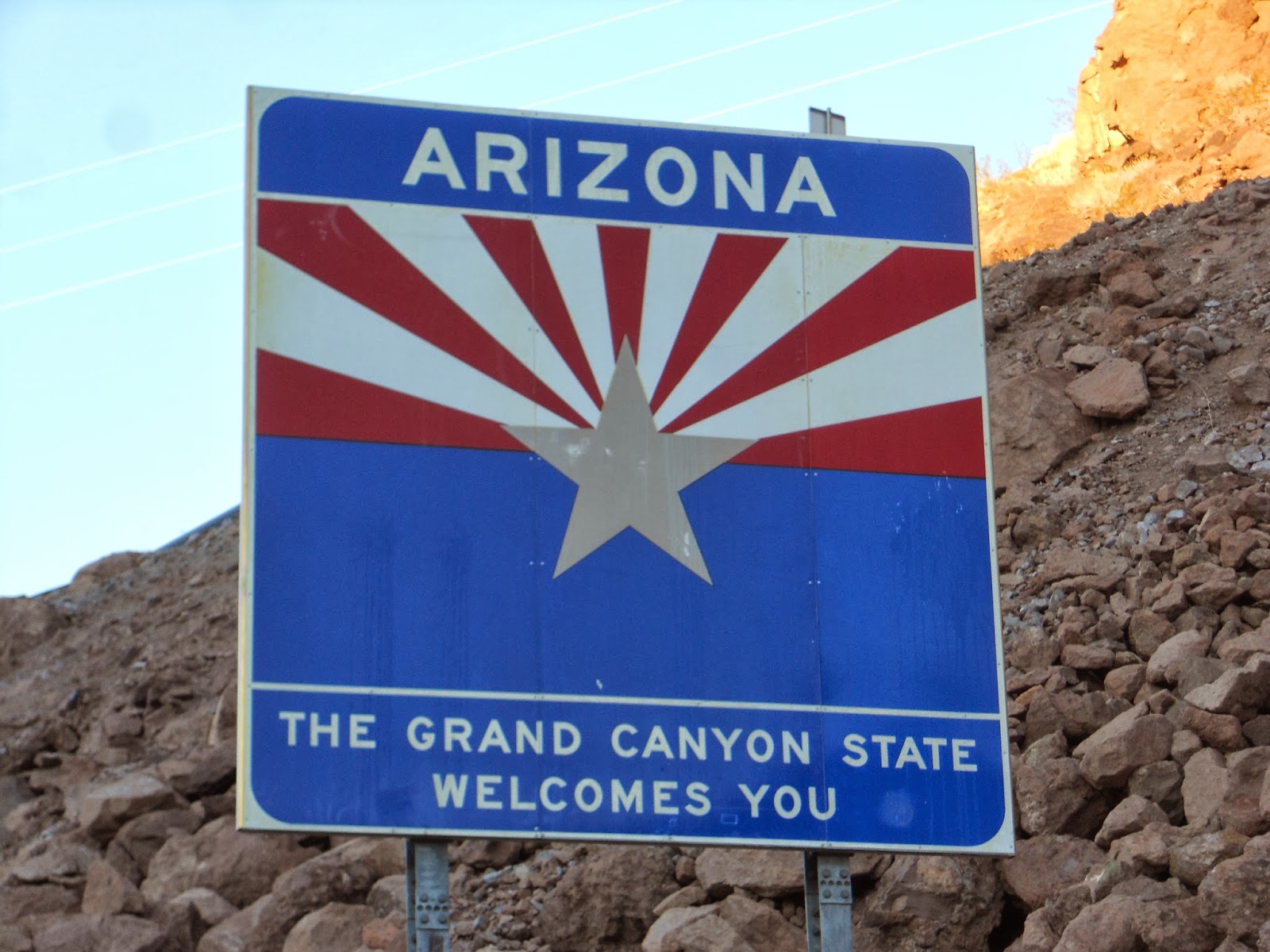
Unfortunately it's almost 10 hours from the Hoover Dam to Cupertino. But who's complaining? It's a road trip! Overall, we traveled 1250 miles, visited two states, hiked one mountain AND...


Played several games of giant cornhole. Success!

January 12, 2014

Smokin' Meats

One of the things Zy and I have in common is our love of cooking. Sunday night dinners and weeknight grill parties were definite highlights of our time in Boston. My favorite thing to cook (and eat) is a big fatty piece of meat. It could be pork, chicken, beef or lamb. Stewed, roasted, braised, baked. However that slab of meat is prepared, I will eat it and I will be very happy.

I've grilled many things in my life, but I had never smoked anything before. Thankfully that all changed a few weeks ago. Our Cali purchase was a $10 smoker at a garage sale. It's a Meca charcoal/water grill with two racks and two bowls. And it's beautiful.


Smoking meats is as easy as it is delicious. I start by filling one of the bowls with charcoal. This charcoal is more difficult to get started, but it lasts for a long time. This is a good thing.


I put the charcoal on the bottom, douse it in lighter fluid and light it through the bottom opening. And now that the fire's going, it's time for the most important part. The meat. 

This time, I felt like cooking boneless pork spareribs. They're not too expensive and will pretty much always turn out tender and succulent and juicy and amazing. I also added some tri-tip that I bought frozen from some random guys in my neighborhood who were selling steaks door-to-door. True story. How did they know I was the type of person to buy meats in this slightly sketchy manner? Life is a mystery. Anyway. 


This combination of spices will make all ribs/chops taste delicious. I should know why, I have read America's New Best Recipe about a million times. All I know is this blend has the perfect amount of sweet and spice and it creates a great meaty crusty char on the outside that makes me salivate. Mmmmm.... So season away! Add more than you think, these are big pieces of meat. 

By now, the charcoal should be about ready. If I have hickory chips, I wrap a couple handfuls in foil, poke holes in the packet and drop it on top. Once it starts smoking, it's time to start...smoking. Fill the second bowl up with liquid. Water. Beer. Wine. Whiskey. Whatever.

Carefully place it on the handles above the charcoal bowl. Put on one grate, place the meat. Put on the second grate, place the meat. Add the top! Walk away for a few hours. Play cornhole!

Even better when you make your own boards

Our smoker has an indicator that tells you when the temperature is ideal. If it gets too hot, we can take the lid off or add more water. If it gets too cold, add more charcoal through the bottom opening. And after five or six hours...

Step back and admire your handiwork


So delicious. The smoker is truly an amazing machine. I wonder what to smoke next. It depends. Will the door-to-door meat salesmen ever return? 


A girl can only hope. 

October 26, 2013

Shiprock, New Mexico


I first came to know Shiprock in a geology class during the latter half of my freshman year at college. For those of you keeping score, that was EIGHT years ago. With a click of the mouse, projected across a large white screen, there was Shiprock: a jagged monolith sailing above the dessert floor. And in those minutes where Shiprock loomed mightily over me in my lecture hall, my journey was set and suddenly all I yearned for in my life was to see Shiprock.


My chance finally came in 2008, and then again just recently when Vness and I crossed the country to California. Each time, watching Shiprock pierce the horizon filled me with an incredible joy. For one, I am always elated to accomplish a dream, to let the web of highways draw me into the Southwest where my geologic mecca lays. Secondly, Shiprock is a massively impressive natural monument and plays a large role in Navajo mythology. Plainly, Shiprock is important.

Shiprock in the winter of 2008.
Shiprock this fall, 2013.

Shiprock is a 1,583 feet tall ancient neck of a long-ago volcano located in Shiprock, New Mexico in the Four Corners Region.


Above maps provided by Google.

About 30 million years ago, lava erupted from the Earth's mantle and was thrust upwards through the crust. The lava cooled, forming a "neck" of rugged igneous rocks. Later, more lava squeezed up through cracks creating jagged dikes, which radiate from the center of the formation.

3D image showing Shiprock's dikes. Provided by Google Earth.
In the shadow of one of Shiprock's dikes.

Vness gazes up at the jagged dikes.
The dikes are composed of a granular iron ore know as "Minette".

Where is the volcano now? Gone. Over the past 30 million years, the softer sedimentary rocks surrounding Shiprock have eroded away and left just the tougher igneous rocks, which retain the jagged structure from millions of years past. 

Aptly named Shiprock because of it's sail-like appearance.

According to Navajo legend, Shiprock or Tsé Bitʼaʼí, which translates into "rock with wings", is the giant bird that brought Diné, the people, to their land in the southwest. Unfortunately, once they arrived, Cliff Monster built a large nest on the bird, trapping it. So the Navajos sent Monster Slayer to combat Cliff Monster, eventually killing him, but injuring the bird meanwhile. Cliff Monster's blood flowed down the bird, coagulating into the radiating dikes that surround the peak and to save the bird, it was turned into stone to remind the Diné of it's sacrifice.

A dirt devil swirls before the mighty Shiprock,

A different Navajo legend says that the ghosts of the Diné who were trapped on the peak after a lightning storm curse the peak. Today, Shiprock is off limits to climbers and other ne'er-do-wells, for preservation and protection. Shiprock is a sacred Navajo sight and not to be tampered with.


But I will still drive thousands of miles out of my way to catch a glimpse of Shiprock's magnificent silhouette, watching with anticipation as it paints the horizon and then with longing as it dips beyond my rear view mirror. 'Til we meet again, Shiprock.

October 25, 2013

El Rancho San Antonio

I mentioned before that it's tough to walk around Cupertino. People are kind to pedestrians, but the city is really designed for bikers and drivers. Luckily, there are plenty of places you can drive to for a short hike or long jaunt in the great outdoors. One such place is Rancho San Antonio Open Space Preserve, a mere five minute drive from our house.


Rancho San Antonio has quickly become my favorite local park. It's part of the Midpeninsula Regional Open Space District, over 60,000 acres of beautiful, wide-open space across three counties. Rancho San Antonio is 3800 acres and home to the third-largest California bay laurel tree in the state.


Wildlife is abundant in Rancho San Antonio. All 23 miles of hiking trails offer the opportunity to see families of deer and squirrels, gorgeous birds, and tiny lizards.

Leave me alone, I'm trying to blend in! Hahahahaha

You could spend hours on the hilly PG & E Trail or do a quick loop on flat Coyote. I'm usually somewhere in-between, so my favorite hike is the High Meadow Trail. It's uphill, but only takes about 30 minutes to reach the summit. For a little effort you get an amazing payoff.

The view of Silicon Valley.

And if all that isn't enough for you, the preserve also has a working farm. Deer Hollow Farm houses a variety of traditional farm animals and produces food onsite. The farm has a huge vegetable garden and an education center for kids. It's also historically significant, a throwback to Santa Clara County's farming days. Some of the old machines are still on display.

Like this tractor from the 1920s 

I haven't been to any of the other preserves, but I have a feeling Rancho San Antonio is one of the best. We'll see if this holds true as I continue to explore my new left coast surroundings!